
TPO Flat Roofing: Benefits, Installation Process, and Commercial Cost Analysis
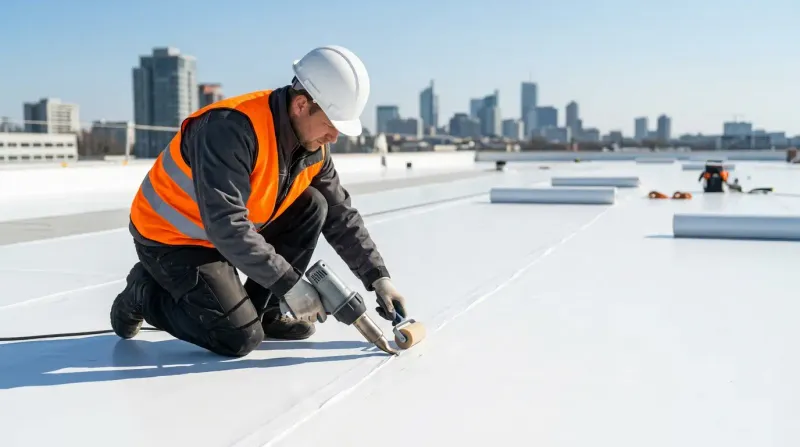
Commercial flat roofing systems constantly face issues such as ponding water, membrane deterioration, and inefficient thermal performance, leading to costly repairs and energy waste. These challenges can significantly impact a building’s structural integrity while increasing operational expenses through higher utility bills and frequent maintenance interventions. Addressing these issues with the right roofing solution is essential for protecting valuable commercial assets.
TPO flat roofing has emerged as a leading solution in the commercial sector, offering exceptional durability and energy efficiency at competitive price points. This single-ply membrane system has revolutionized the commercial roofing industry with its unique combination of weather resistance, reflectivity, and installation versatility. Through this comprehensive guide, you’ll discover the technical specifications, installation methods, cost considerations, and lack of metal roof repair requirements that make TPO an increasingly popular choice for modern commercial buildings.
What is TPO Flat Roofing? Understanding the Material
Thermoplastic Polyolefin (TPO) is a single-ply roofing membrane composed of polypropylene and ethylene-propylene rubber polymers, reinforced with polyester for enhanced strength. This advanced formulation creates a unique balance of flexibility and durability that withstands extreme weather conditions while maintaining dimensional stability. The material typically comes in thicknesses ranging from 45 to 80 mils, with most commercial applications favoring the 60-mil option for its optimal balance of performance and cost.
The reflective white surface of TPO flat roofing systems represents one of its most significant advantages in commercial applications. This high reflectivity can redirect up to 85% of solar radiation away from the building, substantially reducing cooling loads and energy consumption. As one of the most versatile types of commercial flat roofing materials, TPO contains no chlorine, plasticizers, or other environmentally harmful compounds, making it a sustainable choice for environmentally conscious building owners and managers.
Chemical Composition and Manufacturing Process
TPO membranes feature a three-layer construction consisting of:
- A TPO polymer base layer
- A reinforcing polyester fabric center
- A thermoplastic polyolefin compounded top ply
This trilayer construction provides the membrane with puncture resistance, tear strength, and dimensional stability. While many modified bitumen roofing manufacturers have expanded their product lines to include TPO, specialized manufacturers have developed proprietary formulations with enhanced UV stabilizers and weathering packages designed for specific climate conditions.
The manufacturing process involves precision control of thickness, reinforcement positioning, and surface texture to ensure consistent field performance. Advanced quality control measures include UV resistance testing, puncture and tear evaluation, and accelerated weathering assessments to predict long-term performance under various environmental conditions.
Key Benefits of TPO Roofing Systems
Energy Efficiency and Cost Savings
TPO’s highly reflective surface significantly reduces solar heat gain, delivering measurable energy savings in cooling-dominated climates. Buildings with TPO roofing systems typically experience 20-30% reductions in cooling costs compared to buildings with dark-colored roofing. This reflectivity also contributes to urban heat island mitigation, helping commercial properties meet increasingly stringent energy codes and sustainability targets.
The energy performance remains relatively stable over time, with properly maintained TPO roofs retaining most of their reflective properties throughout their service life. This sustained performance translates into consistent operation cost savings, making TPO an economically advantageous option for long-term facility planning.
Durability and Weather Performance
TPO membranes demonstrate excellent resistance to:
- Ultraviolet radiation
- Ozone exposure
- Chemical contamination
- Microbial growth
- Physical impact, reducing hail damage repair needs
The material’s flexibility allows it to accommodate building movement and thermal cycling without developing fatigue cracks. Quality TPO formulations also resist degradation from common rooftop pollutants, including exhaust emissions and ponded water. These durability characteristics make TPO appropriate for a wide range of commercial applications across diverse climate zones.
Environmental Advantages
As building owners increasingly prioritize sustainability, TPO offers several environmental benefits:
- Contains no chlorines, plasticizers, or heavy metals
- It can be recycled at the end of its service life
- Contributes to LEED certification points
- Reduces carbon footprint through energy efficiency
- Minimizes landfill impact compared to tear-off intensive roofing systems
These environmental attributes position TPO as a forward-thinking solution for companies with corporate sustainability initiatives and environmental commitments. Compared to other types of commercial flat roofing materials, TPO consistently ranks among the most environmentally responsible options available today.
TPO Roof Installation: Process and Methods
Mechanically Fastened vs. Fully Adhered Systems
TPO roofing systems employ two primary attachment methods, each with distinct advantages and applications:
Mechanically Fastened Systems
- Secure the membrane to the roof deck using specialized fasteners and plates
- Typically 15-20% less expensive than fully adhered installations
- Install more quickly, reducing labor costs and project duration
- Perform exceptionally well in high-wind regions when properly engineered
- Allow for easier roof removal during future renovations
Fully Adhered Systems
- Bond the membrane directly to the substrate using specialized adhesives
- Create a smoother aesthetic appearance without fastener patterns
- Eliminate potential thermal bridging through fasteners
- Reduce flutter noise in wind-prone areas
- Provide superior resistance to billowing in buildings with positive internal pressure
The selection between these methods depends on building characteristics, performance requirements, budget constraints, and local code provisions. Some projects employ hybrid approaches, using full adhesion in perimeter and corner zones with mechanical fastening in field areas.
Installation Sequence and Critical Considerations
A proper TPO installation follows these key phases:
Substrate Preparation:
- Removal of existing roofing (if applicable)
- Repair of damaged deck areas
- Installation of appropriate vapor barriers
- Placement and securing of insulation layers
Membrane Placement:
- Positioning of TPO sheets with appropriate overlaps
- Attachment using a selected mechanical or adhesive method
- Creation of seismic isolation at vertical transitions
Seam Welding:
- Hot-air welding of sheet overlaps (typically 1.5-2 inches)
- Temperature control between 400-500°F for optimal molecular bonding
- Continuous seam testing for integrity verification
Flashing and Detail Work:
- Treatment of penetrations, corners, and edges
- Installation of pre-manufactured accessories
- Reinforcement of high-stress areas
Final Inspection and Quality Control:
- Comprehensive visual assessment
- Electronic leak detection (if specified)
- Documentation of completed installation
The quality of these installation processes directly impacts system performance and longevity, making contractor selection a critical decision in the roofing project.
Common Installation Challenges and Solutions
Several technical challenges require attention during TPO installation:
- Temperature Limitations: TPO installation requires ambient temperatures typically above 40°F for proper seam welding and adhesive curing. Cold-weather installations may require tenting, temporary heating, and special adhesive formulations.
- Contamination Control: Seam areas must remain clean and free of moisture, dust, and adhesive residue to achieve proper welding. Installers must maintain strict cleanliness protocols, especially in urban or industrial environments.
- Flash-Off Time Management: Adhesives used in fully adhered systems require precise flash-off times that vary with temperature and humidity. Premature or delayed membrane placement can compromise adhesion strength and longevity.
- Substrate Compatibility: TPO may require separation layers when installed over certain substrates, including some existing roof materials, asphaltic products, and coal tar pitch. Failure to address compatibility issues can result in membrane degradation.
Professional roofing contractors with TPO-specific training and certification address these challenges through proper planning, material selection, and quality control procedures.
TPO Roofing Cost Analysis for Commercial Buildings
Determining Factors for TPO Roofing Cost Per Square Foot
The TPO roofing cost per sf typically ranges from $5.50 to $14.00 installed, with this variation influenced by:
Membrane Thickness
- 45 mil: $5.50-$8.00 per square foot
- 60 mil: $6.50-$10.00 per square foot
- 80 mil: $8.00-$14.00 per square foot
Attachment Method
- Mechanically fastened systems generally cost 15-20% less than fully adhered installations
- Ballasted systems (less common with TPO) may offer cost advantages in certain applications
Insulation Requirements
- R-value specifications
- Tapered designs for drainage
- Cover board requirements
Project Complexity
- Roof penetration density
- Perimeter detailing requirements
- Access limitations
- Project scheduling constraints
Warranty Terms
- Standard manufacturer warranties (typically 15-20 years)
- Extended warranty options (up to 30 years)
- Labor coverage inclusions
For accurate budgeting, property owners should obtain multiple detailed quotes specifying all system components, not just the membrane material. When evaluating the TPO roofing cost per sf, investors should also factor in potential energy savings and reduced maintenance expenses over the system’s lifespan.
Comparative Analysis: TPO vs. Alternative Systems
When evaluating commercial roofing options, TPO should be compared with other common types of roof coverings for flat roofs:
| System Type | Initial Cost Range (per sf) | Expected Lifespan | Energy Efficiency | Maintenance Needs |
| TPO | $5.50-$14.00 | 15-30 years | Excellent | Moderate |
| EPDM | $4.50-$11.00 | 20-30 years | Poor to Moderate | Low |
| PVC | $7.00-$16.00 | 20-30 years | Excellent | Low |
| Modified Bitumen | $5.00-$12.00 | 15-25 years | Fair to Good | Moderate to High |
| Built-Up Roofing | $6.00-$15.00 | 15-30 years | Poor to Fair | High |
This comparison reveals that while TPO may not always have the lowest initial cost, its performance characteristics often deliver superior lifetime value. The moderate initial commercial roof repair cost for TPO is frequently offset by energy savings and reduced maintenance expenses over the system’s lifespan.
Long-Term Value and ROI Considerations
A comprehensive TPO cost analysis must extend beyond initial installation to consider:
- Energy Savings: Buildings in cooling-dominated climates frequently realize $0.10-$0.30 per square foot in annual energy savings with reflective TPO roofing compared to dark-colored alternatives.
- Maintenance Requirements: TPO typically requires scheduled inspections and occasional cleaning, but generally needs fewer repairs than built-up or modified bitumen systems. Annual TPO roof maintenance costs average $0.05 to $0.15 per square foot.
- Repair Simplicity: When damage does occur, TPO repairs are relatively straightforward and cost-effective, with the typical commercial roof repair cost for TPO significantly lower than for multi-ply systems.
- Potential Incentives: Many utilities and municipalities offer rebates or incentives for cool roofing installations, sometimes offsetting 10-30% of project costs.
- Roof Asset Management: TPO’s predictable performance allows for more reliable capital planning and roof asset management compared to systems with more variable performance records.
These factors typically result in a 7-10-year payback period for the premium associated with selecting a high-quality TPO system over less expensive alternatives, making TPO an economically sound long-term investment.
TPO Roof Maintenance and Longevity
Essential Maintenance Protocols
Proper TPO roof maintenance is critical for maximizing system performance and lifespan. A comprehensive maintenance program should include:
Scheduled Inspections:
- Semi-annual professional evaluations (spring and fall)
- Post-storm assessments following significant weather events
- Documentation of roof condition with photographs and written reports
Drainage System Management:
- Regular clearing of drains, scuppers, and gutters
- Verification of positive drainage and elimination of ponding areas
- Maintenance of drain strainers and guards
Surface Cleaning:
- Periodic washing to maintain reflectivity (typically every 2-3 years)
- Removal of organic debris and contaminants
- Specialized cleaning for stubborn deposits or stains
Penetration Maintenance:
- Inspection of all flashings and penetration details
- Resealing of termination bars and counter-flashing when needed
- Verification of watertight conditions at all roof transitions
Traffic Protection:
- Installation of walkway pads around equipment
- Establishment of designated maintenance paths
- Protection during third-party work (HVAC service, etc.)
These TPO roof maintenance activities typically cost $0.08-$0.15 per square foot annually but can extend service life by 5-10 years, representing an excellent return on investment.
Addressing Common Performance Issues
Despite TPO’s durability, certain issues may arise that require attention:
- Membrane Punctures: Caused by dropped tools, wind-blown debris, or unauthorized roof access. These can be repaired using compatible TPO patches and proper heat-welding techniques.
- Seam Failures: Occasionally occurring at improperly welded seams, these can be addressed through cleaning and rewelding by qualified technicians.
- Perimeter Attachment Issues: Wind uplift can stress perimeter attachments. Regular inspection and reinforcement of these areas prevent more significant damage.
- UV Degradation: While modern TPO formulations are highly UV-resistant, prolonged exposure may eventually lead to surface chalking. Roof coatings can rejuvenate aged membranes.
- Contaminant Exposure: Chemical discharges from rooftop equipment may damage TPO in concentrated areas. Protection pads and proper drainage around equipment prevent this issue.
Promptly addressing this visual damage to the roof minimizes the cost of commercial roof repairs and extends system performance.
Maximizing TPO Roofing Lifespan
With proper installation and maintenance, TPO roofing systems can achieve service lives of 20-30 years. Key strategies for maximizing longevity include:
- Selecting Appropriate Thickness: 60-mil or 80-mil membranes offer greater puncture resistance and weathering resistance for a longer service life.
- Implementing Proactive Inspections: Identifying and addressing minor issues before they escalate prevents more significant damage.
- Controlling Roof Access: Limiting foot traffic and requiring specific protocols for maintenance personnel protects the membrane from physical damage.
- Managing Rooftop Equipment: Ensuring proper installation and maintenance of HVAC units, satellite dishes, and other rooftop equipment prevents damage from vibration, discharges, or improper mounting.
- Considering Protective Coatings: Applying specialized acrylic or silicone coatings to aging TPO membranes can extend service life by 5-10 years at approximately one-third the cost of replacement.
These practices ensure that commercial building owners maximize the return on their roofing investment while minimizing disruptions from premature failure or replacement. Like many modified bitumen roofing manufacturers that have diversified into single-ply systems, TPO manufacturers continue to improve their formulations to enhance durability and performance across various climate zones.
Get Your System with The Best
With proper specification, professional installation, and programmed maintenance, TPO roofing systems deliver exceptional value throughout their 20-30 year service life, making them a top option for facility managers and building owners.
Brandon J Roofing brings specialized expertise in TPO roofing systems, offering commercial clients the technical knowledge and installation precision required for optimal performance. Our professional technicians receive ongoing manufacturer certification and employ the industry’s most advanced installation techniques to ensure your TPO roofing system delivers its full potential. We understand the critical role your roofing system plays in protecting your commercial investment and supporting your operational goals.